


Local Open AI and AI Factories: a practical architecture for safer, cheaper and more democratic AI
The real question is not model size, but control
The debate on artificial intelligence is often framed as a race for the biggest model. That is the wrong starting point for public administration, businesses and education. The decisive questions are different: who controls the infrastructure, where do the data go, how predictable is the cost, who can audit the system, and whether the organisation using AI builds internal capacity or becomes permanently dependent on remote platforms.
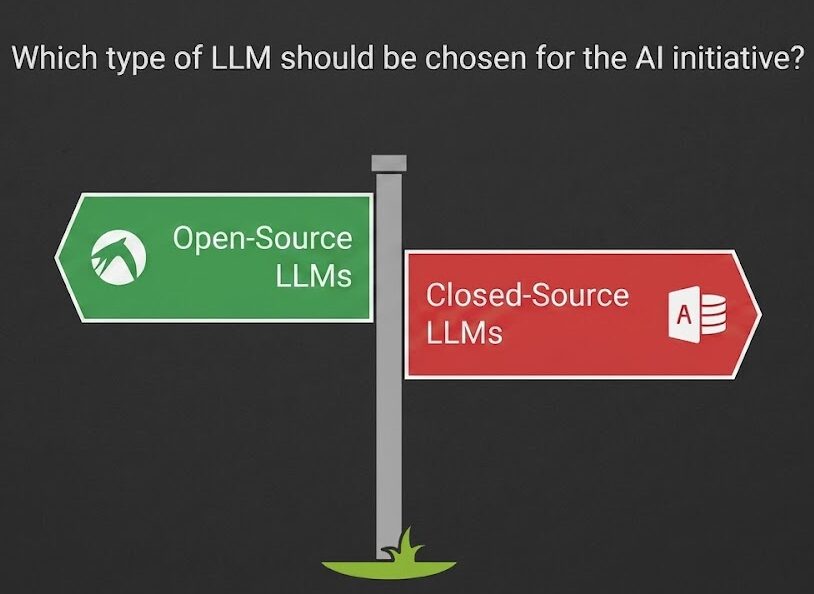
Local open-source AI models offer a practical answer. They allow a municipality, a ministry, a university, a school or a company to run AI inside its own environment or on trusted public infrastructure. The model, the retrieval system, the access rules, the monitoring tools and the data flows can be governed by the organisation itself. This is not a second-best solution. For many everyday use cases, it is the more rational one.
Safer because the data stay under control
For sensitive use cases, safety begins with locality. Administrative documents, student data, internal business knowledge, legal files, health-related information or citizen requests should not be casually sent to external systems. A local open AI deployment can be designed with no external data transfer, encrypted internal communications, network segmentation, identity and access management, rate limits, anonymised logs and clear data retention policies.
This matters especially in the public sector. AI systems used by public authorities must be accountable. A system that answers questions about rights, benefits, permits, taxation or public services should not rely on a remote black box. It should be connected to verified institutional knowledge through retrieval-augmented generation, produce traceable answers, be monitored by responsible officials and remain subject to human decision-making.
Cheaper because frequent use should not become permanent rent
Commercial AI platforms are attractive because they are easy to start using. But once an organisation moves from occasional experimentation to systematic use, token-based pricing and subscriptions can become a long-term dependency. Every new user, every workflow and every document processed increases the bill. The organisation pays again and again for access to infrastructure it does not control.
Local open models change the economics. Hardware, integration and technical support become an investment in reusable capacity. The organisation can run repeated workloads, tune the system to its documents, measure usage, optimise performance and gradually build its own skills. For routine tasks such as document summarisation, internal search, form pre-checks, meeting transcription, classification of citizen requests, drafting support and knowledge retrieval, local models can deliver sufficient quality at a lower and more predictable cost.
This is particularly important for small and medium-sized enterprises. Instead of being locked into foreign platforms, they can develop services around deployment, maintenance, evaluation, cybersecurity, training and sector-specific adaptation of open AI systems. Public and private spending then strengthens the local technology ecosystem rather than simply financing external subscriptions.
More democratic because open systems can be audited
Democratic AI is not only about privacy. It is about power. Closed systems concentrate power in the hands of a few providers. Open systems distribute it. When models, software components, evaluation methods, prompts, retrieval pipelines and documentation can be inspected, AI becomes part of a public accountability framework.
This is why local open AI is a strategic choice for education. Schools and universities should not depend blindly on opaque systems that may produce convincing but false answers, process student data in unclear ways or weaken critical thinking. AI in education must be supervised, age-appropriate, pedagogically justified and transparent. A local open infrastructure makes this far more achievable.
Where an AI Factory is the right tool
DAEDALUS, the computing infrastructure of PHAROS, is Greece’s new national supercomputer operated by GRNET at the Lavrion Technological and Cultural Park, belongs to the class of national high-performance computing infrastructures. Its aggregate performance is above 80 PFLOPS, with storage capacity in the multi-petabyte range. This is infrastructure for training, large-scale adaptation, benchmarking and evaluation of AI models, not for every routine chatbot request.
A local open AI pilot is the opposite layer of the architecture: small, affordable and close to the user. A practical deployment can include two Apple Mac Studio M3 Ultra nodes with 256 GB unified memory and two NVIDIA DGX Spark GB10 nodes with 128 GB unified memory, 4 TB NVMe storage per node, and support for Metal, CUDA, llama.cpp, vLLM and TensorRT-LLM. Such a system does not compete with DAEDALUS. It complements. Supercomputers train, test and improve models. Local open nodes run them every day, close to institutional data, with lower cost, lower latency and stronger data protection.
AI Factories such as Greece’s PHAROS have a different and essential role. They are not a replacement for local AI deployment. They are large-scale public infrastructures for heavy computational work: training or substantially adapting large models, running advanced experiments, supporting research teams and start-ups, benchmarking models, developing high-quality datasets, testing safety and performance, and working on strategic areas such as health, Greek language and culture, climate, energy and sustainability.
An AI Factory is the right place when the task requires supercomputing capacity, large-scale training, complex simulation, national-level model development or deep technical support for researchers and innovative companies. It is also the right environment for building and validating models that can later be deployed more widely.
Where local open models are the right tool
Local open models are the right choice for daily inference. They should run close to the data and close to the users: in ministries, municipalities, regions, schools, universities, hospitals, chambers, cooperatives and companies. They are best suited for controlled, repetitive, high-value workflows where privacy, cost, latency, customisation and institutional accountability matter more than raw scale.
The strongest architecture is therefore not centralised and not fragmented. It is hybrid. AI Factories train, test, benchmark and improve models and methods. Local open deployments apply them in real services, with human oversight and domain-specific knowledge. Feedback from local use, properly anonymised and governed, can then improve future versions. This creates a virtuous cycle between national compute capacity and local democratic control.
For Greece, this is the strategic path. PHAROS can provide the heavy infrastructure needed for frontier research and national AI capacity. Local open models can make AI useful every day in public administration, business and education. Together, they can turn AI from an imported service into a public capability.
Article sources:
GlossAPI, Local open-source AI models: This article explains why local open models are a safer, cheaper and more democratic option for public administration, businesses and education, especially when combined with controlled knowledge retrieval and accountable governance: https://blog.glossapi.gr,
GRNET, Pharos: The Greek AI Factory for accelerating AI innovation: The official description of Greece’s AI Factory, designed to connect supercomputing capacity, research, public administration, industry and priority areas such as health, culture, language and sustainability: https://grnet.gr/business-directory/Pharos-AI-Factory/,
EuroHPC Joint Undertaking, Greece AI Factory: The European presentation of PHAROS as a hub for academia, research, the public sector and private enterprises, with a focus on health, culture and language, and sustainability: https://www.eurohpc-ju.europa.eu/ai-factories/greece_en,
Mistral AI, Mistral 7B and Mixtral of Experts: Mistral AI is a leading European example of open-weight models that combine strong performance with lower computational cost, making them relevant for local and controlled deployments: https://mistral.ai/news/announcing-mistral-7b/ and https://mistral.ai/news/mixtral-of-experts/,
EU AI Act and UNESCO Guidance for Generative AI in Education and Research: The EU AI Act provides the European framework for risk management, transparency and accountability, while UNESCO’s guidance supports human oversight, data protection and pedagogically responsible use of generative AI in education: https://eur-lex.europa.eu/eli/reg/2024/1689/oj/eng and https://www.unesco.org/en/articles/guidance-generative-ai-education-and-research.